
Catalog loading…
The Ryan Lewis Collection
Today’s exhibit is being selected.
The museum catalog will choose a different artifact for each visit.
CatalogedPreservation Record
A private museum of authenticated music memorabilia, built over 40 years of concerts and personal encounters.
This is not a public exhibition. It is a curated timeline of the moments that mattered — from Frank Sinatra through Mac Miller, and everything in between.
You have been invited inside. The door is unlocked.
Private Museum · Erie, Pennsylvania
Curated Over a Lifetime
Founded by Ryan Lewis
The physical museum is divided into curated spaces. Choose where you would like to begin your walk through the archive.
The collection is housed in a purpose-built environment combining the rigor of an archival museum with the intimacy of a private speakeasy. Select a zone to filter the digital catalog.
The museum catalog will choose a different artifact for each visit.
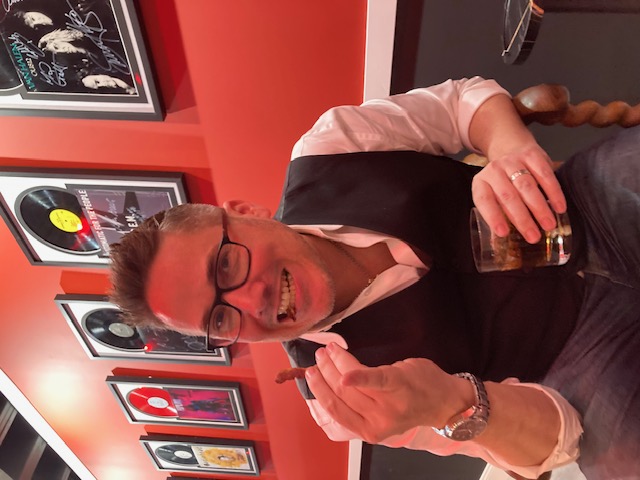
“This isn’t the story of what I own. It’s the story of how I got here.”
The Ryan Lewis Collection grew from a lifetime of concerts, personal encounters, carefully preserved artifacts, and the belief that music history lives most powerfully through the stories attached to it.
Constance and Coltrane are part of the museum’s life—not supporting characters, but family. Together, the collection’s physical rooms in Erie and its digital galleries form one living archive.
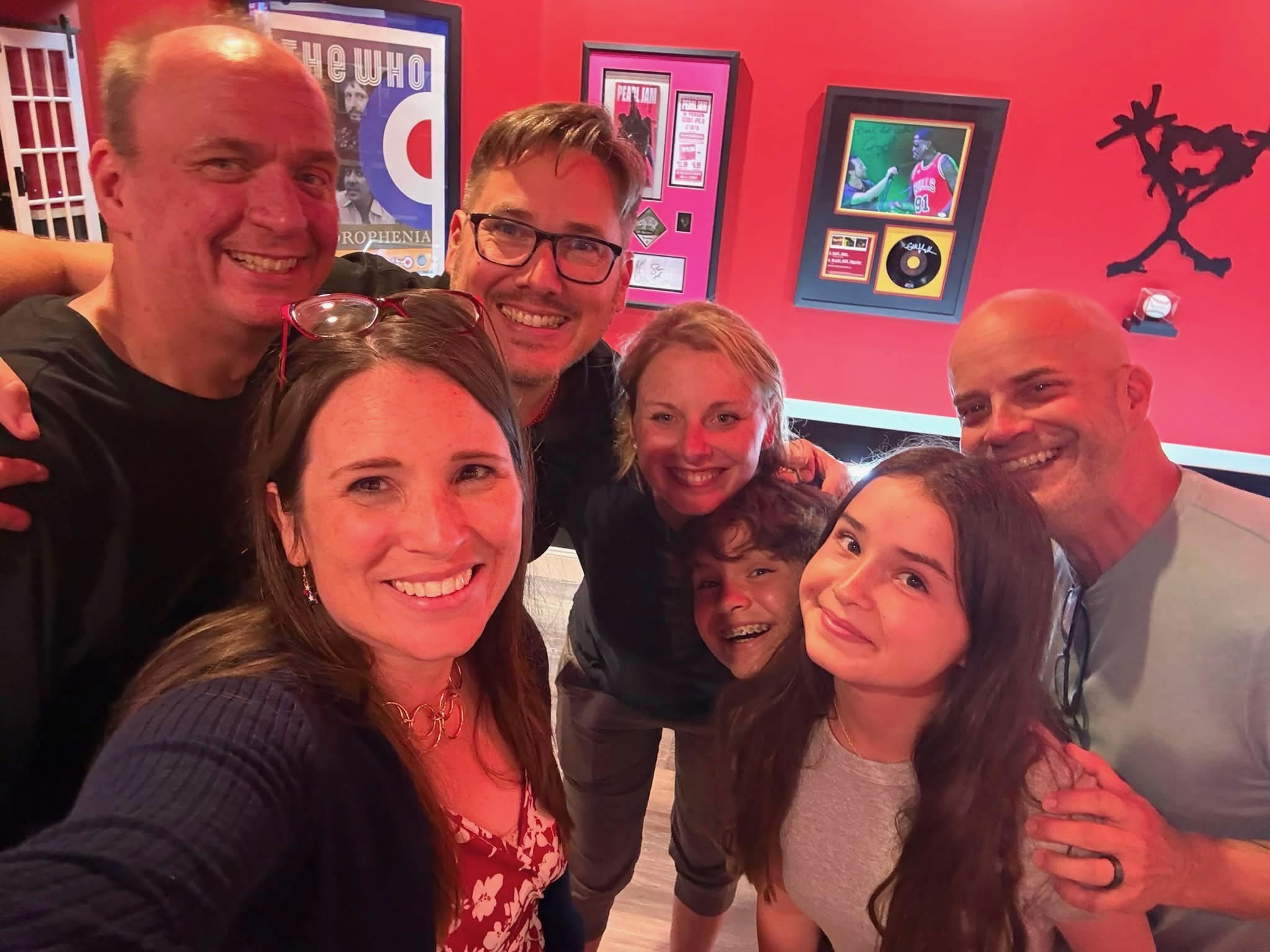
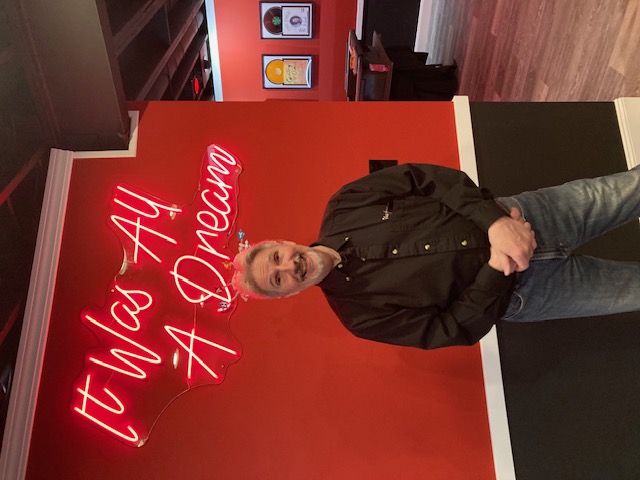
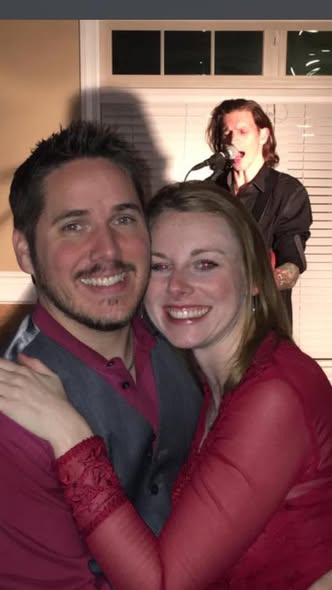
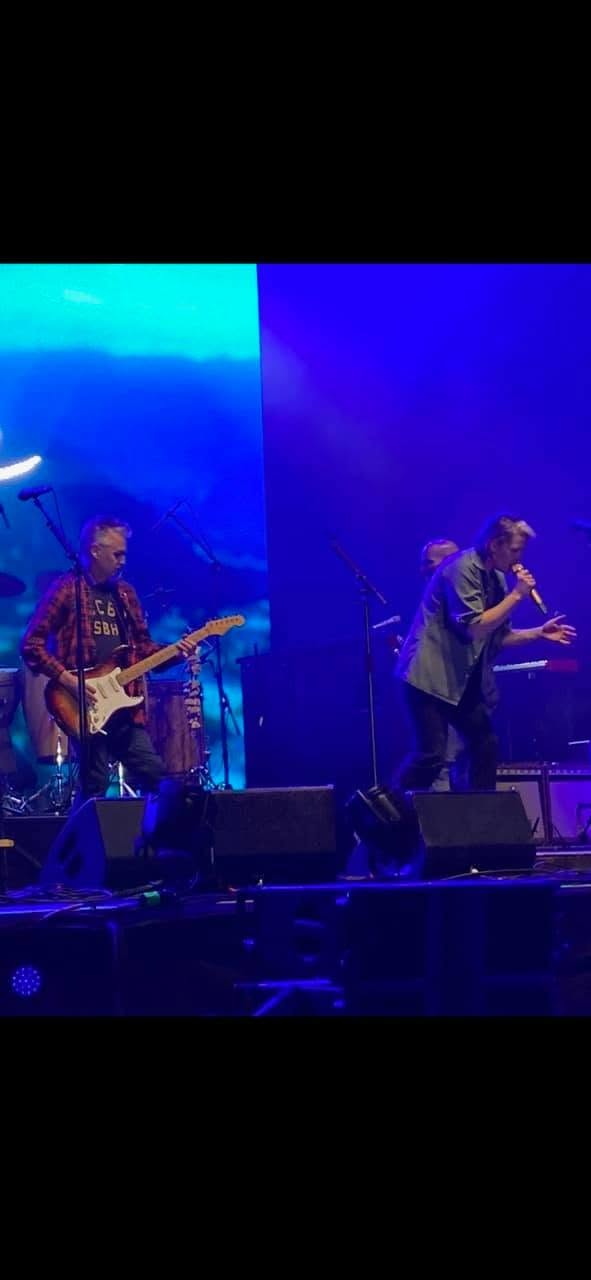
Some collections are built in auction houses. This one was built at shows like this — a private performance by Scott Blasey of The Clarks, attended by Ryan and Constance. This moment is why the museum exists.
Scott Blasey · The Clarks · Private Performance
Each tour assembles a focused route through the live catalog. The tour panel stays with you as you move from exhibit to exhibit.
Waiting for the Sun era begins a line through classic-rock history represented in the collection.
Mötley Crüe opens the curator’s lifelong concert journey.
A Jon Bon Jovi encounter turns music fandom into personal history.
Aerosmith and Skid Row mark a defining chapter.
Pearl Jam’s Ten and a new generation reshape the collection’s center of gravity.
Toronto, Pearl Jam, Neil Young, and a moment that becomes part of The Long Road.
A modern Pittsburgh landmark later joins the authenticated collection.
The catalog engine, collection rooms, Coltrane, and curator-guided experiences become one museum platform.
The collection is not meant to be viewed on a screen. It is meant to be experienced in person, room by room, drink in hand. This is the route you take when the door unlocks.
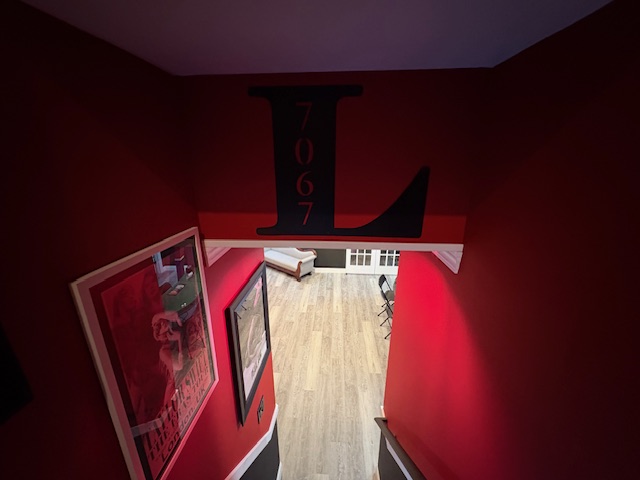
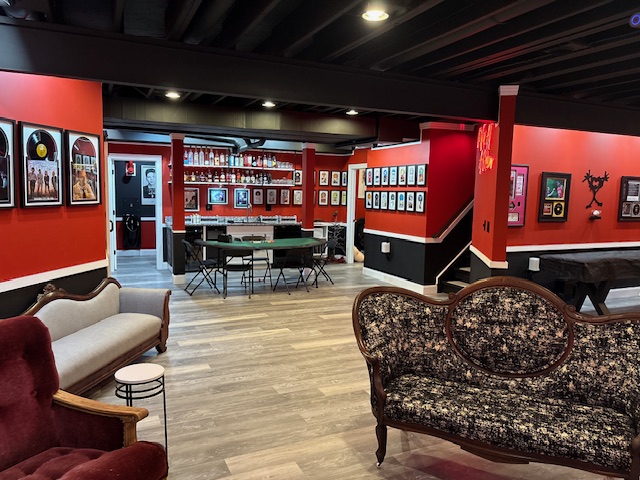
The experience begins before you reach the floor. As you descend the stairs, the red and black walls rise up around you, and halfway down, mounted directly on the ceiling where you can't miss it, is the L7067 sign. You are leaving the house and entering the speakeasy. The walls here are lined with Pearl Jam and Taylor Swift tour posters—none of them signed, but all of them attended by the curator and his family. It sets the tone immediately: this archive is personal.
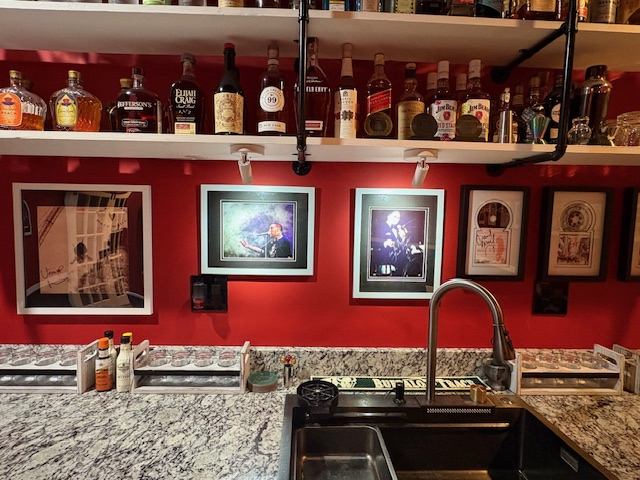
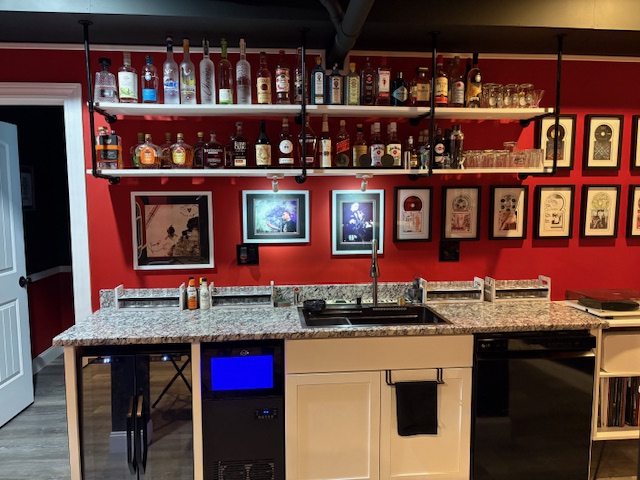
You turn the corner at the bottom of the stairs and step into the bar. Industrial pipe shelving holds the liquor, a painted portrait anchors the granite counter, and the red walls are lined with a precision grid of framed, signed CDs. This isn't decorative filler — these are cataloged artifacts. On the wall directly behind the bar: the Frank Sinatra signed 8×10 with the inscription "All the Best", and the rare Mac Miller signed live performance photograph — two cornerstone pieces that define the collection's curatorial range, from the Crooners through the Rappers. From here, you can grab a drink, or step through the doorway into the private Sinatra Room.
Moving toward the main hall, the space opens into a lounge anchored by a fireplace and authentic, professionally restored furniture from the late 1800s and early 1900s. Above the seating area is the beginning of the chronological album wall—a continuous physical timeline of signed records spanning from Frank Sinatra through 1987. Almost every artist on this section of the wall is in the Rock & Roll Hall of Fame.
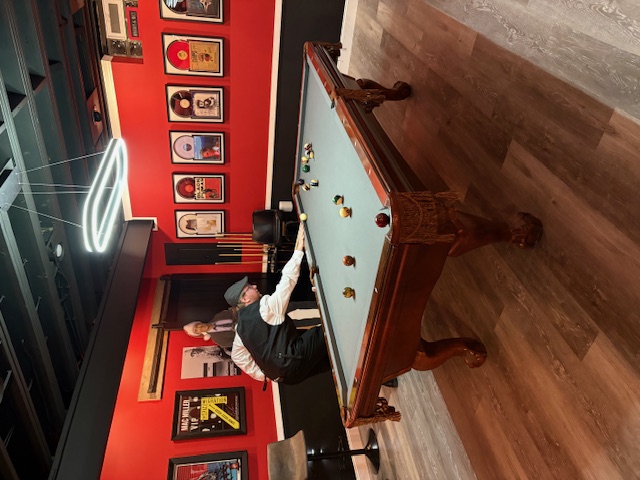
The lounge opens directly into the Great Hall. The chronological album wall continues its march through modern music history. The center of the room is built for the speakeasy atmosphere, featuring a craps table, a pool table, and a shuffleboard table. The artifacts here are significant, but the space is designed to be lived in, not tiptoed through.
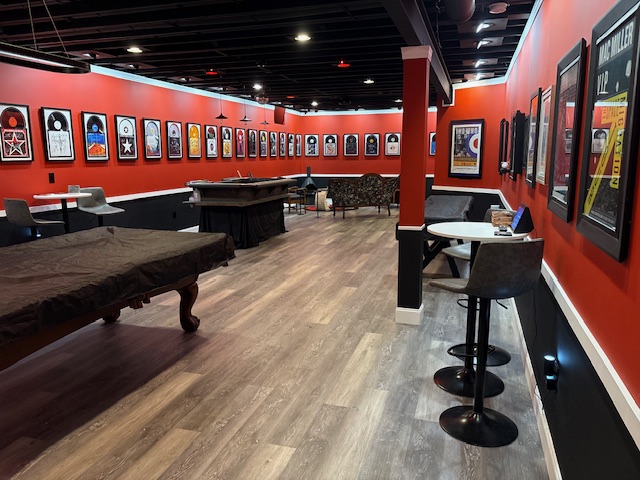
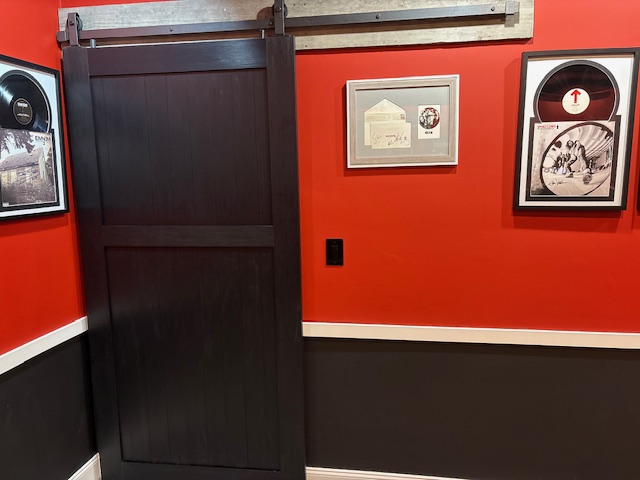
To the left of the Great Hall is the emotional core of the collection: the Seattle Sound wall. This is where the heaviest pieces reside. You'll find the signed Pearl Jam Yield tour poster, the Black/Red/Yellow signed piece, and the Vitalogy hardcover book display. Tucked in the back corner, near the sliding black barn door, is the Mother Love Bone piece. The curation here is dense and deliberate.
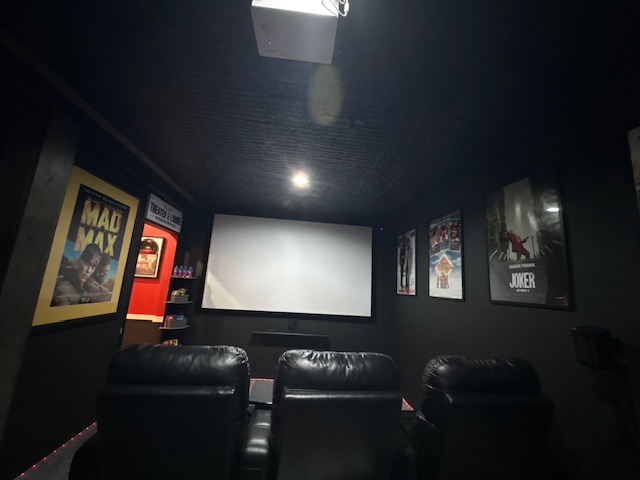
Slide open the black barn door and you enter the Listening Theater. Six leather reclining chairs sit in stadium formation facing a 120-inch projector screen, driven by state-of-the-art Sonos surround sound. The walls hold movie posters and two crucial pieces of Pearl Jam history: the PJ20 official poster, and the Let's Play Two concert poster from Wrigley Field—a show the curator attended on day one of filming.
Preserving the Stories Behind the Music
These pieces deserve more than storage. They deserve context, professional presentation, and a permanent record of why they matter.
“I don’t consider myself the owner of these pieces. I’m simply their curator until it’s someone else’s turn to preserve them.”
— Ryan Lewis, Founder & Curator
A rare fan-club Christmas card and original postmarked envelope signed by the complete original lineup—an intimate artifact from the Seattle scene before history changed course.
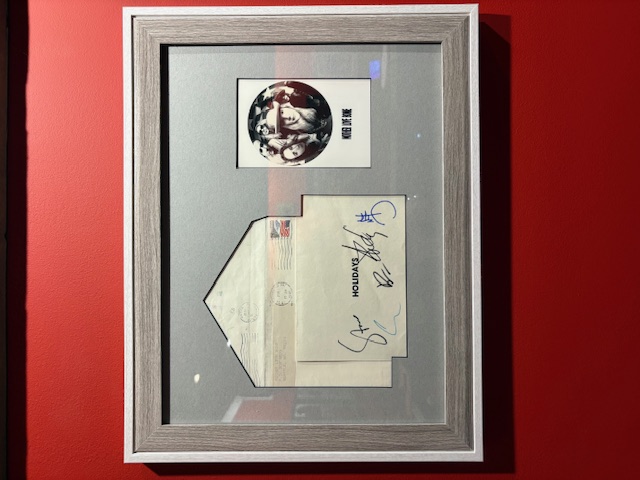
Postmarked January 17, 1990, the exhibit carries the signatures of Andrew Wood, Jeff Ament, Stone Gossard, Bruce Fairweather, and Greg Gilmore. Its direct fan-club provenance makes it more than an autograph piece—it is a surviving document from the brief, foundational moment that preceded Temple of the Dog and Pearl Jam.
Behind one of the museum’s most coveted artifacts is a six-seat private listening theater with reclining leather stadium seating and Sonos surround sound. Countless concerts and MTV Unplugged sessions have been experienced here.
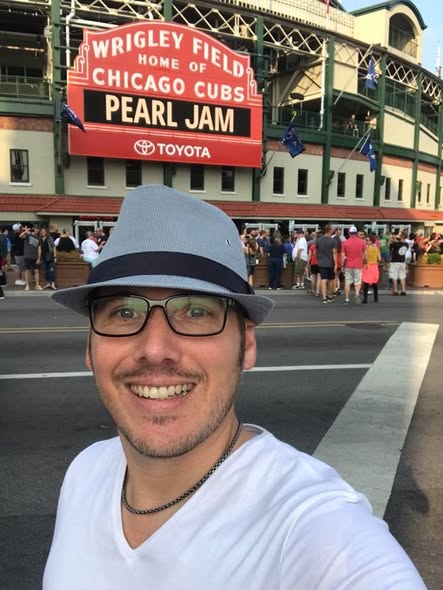
A Let’s Play Two poster hangs in the theater. Ryan attended Pearl Jam’s first Wrigley Field show on August 20, 2016—the first of the two performances captured for the film.
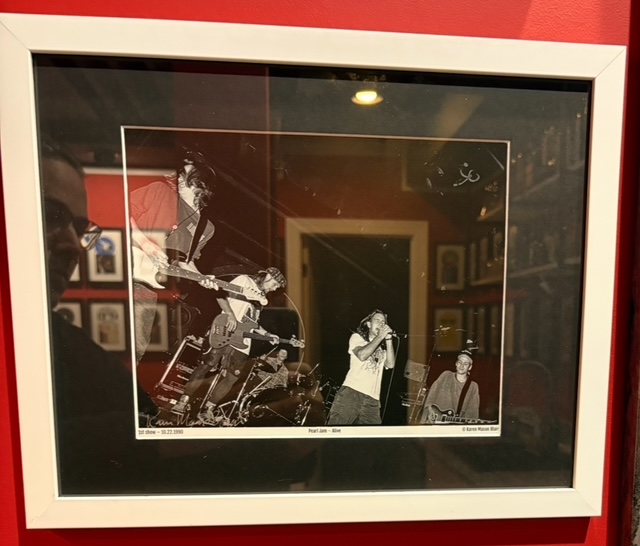
A framed photograph from October 22, 1990, signed by photographer Karen Mason Blair. It documents the night Pearl Jam first stepped onto a stage.
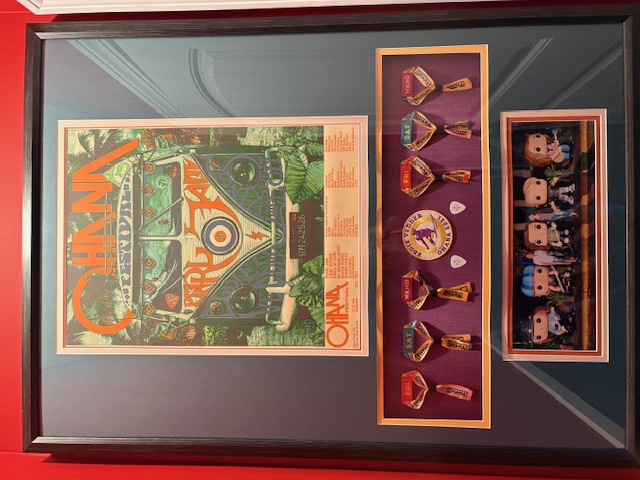
Positioned at the top of the stairs, this time capsule closes the visit with live music: the official poster, three-day wristbands, Mike McCready picks, and a photograph of Ryan and Constance.
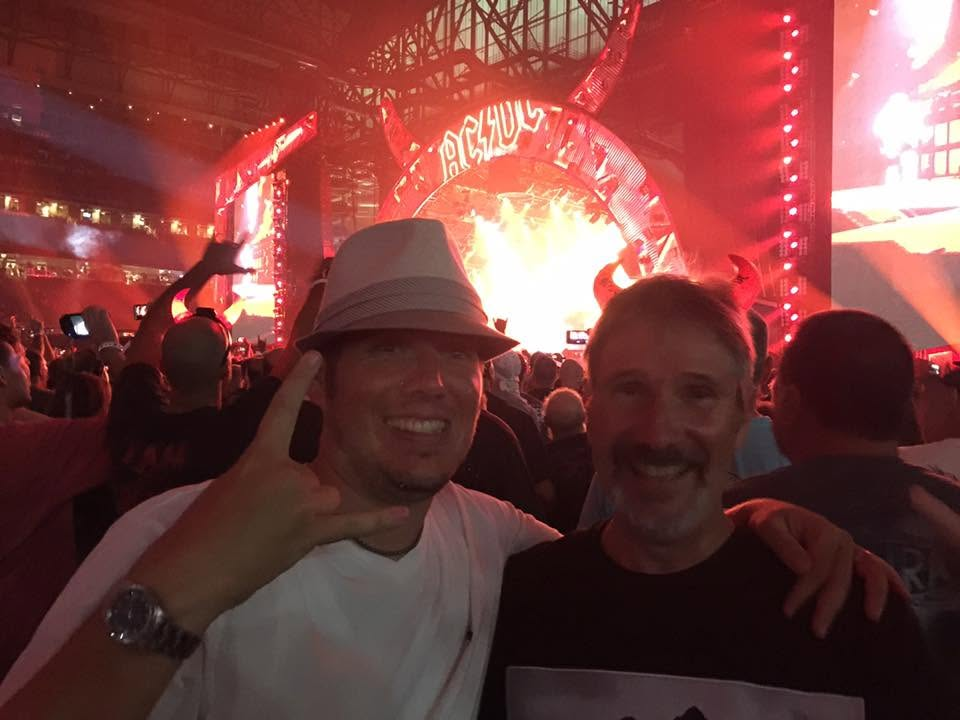
“This isn’t the story of what I own. It’s the story of how I got here.”
From Mötley Crüe in 1985, to the Bon Jovi encounter, the rebellion of Aerosmith and Skid Row, and the awakening in Toronto with Pearl Jam and Neil Young—the museum’s emotional history begins here.
The Long Road · Personal Provenance
Before the collection was cataloged and displayed, it was lived. These seven tickets are retained records of the concerts that shaped the curator, the people beside him, and the collection that followed.
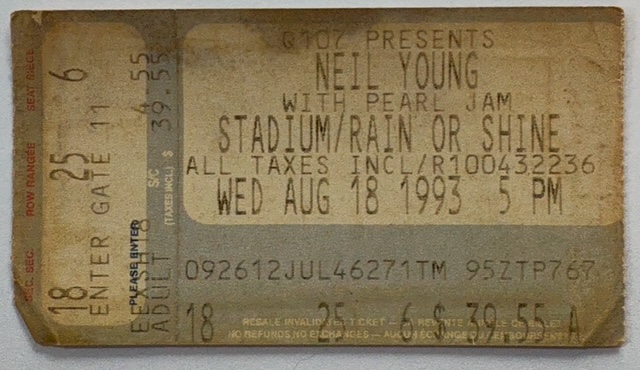
CNE Grandstand · Toronto, Ontario
“The night my Pearl Jam journey began.”
The first preserved ticket in this sequence marks the night the Pearl Jam story truly began: Toronto, Neil Young, and the sense that one concert could rearrange what music meant.
Attendance Artifact · Original scan retained by the Curator
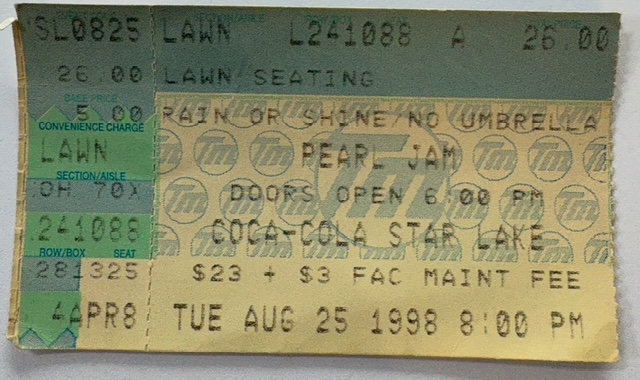
Star Lake Amphitheatre · Pittsburgh, Pennsylvania
“A song I heard that night would eventually become my wedding song.”
A lawn ticket from the Yield era now carries a second meaning. The concert memory later became tied to family history through the song that would become Ryan’s wedding song.
Attendance Artifact · Original scan retained by the Curator
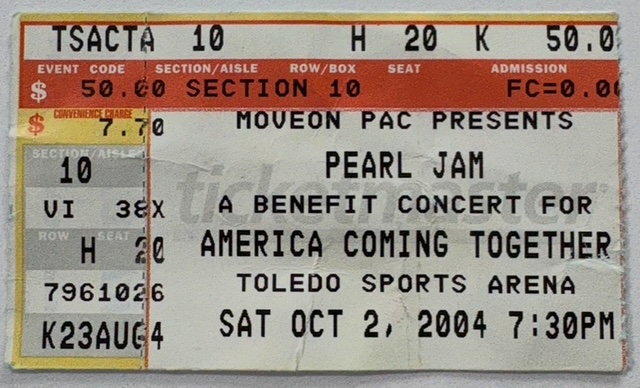
Toledo Sports Arena · Toledo, Ohio
“Pearl Jam and Neil Young, together in a room that felt impossibly small.”
The benefit-concert language printed on the ticket gives this object its documentary weight. It records a politically charged night that became larger than a standard tour stop.
Attendance Artifact · Original scan retained by the Curator
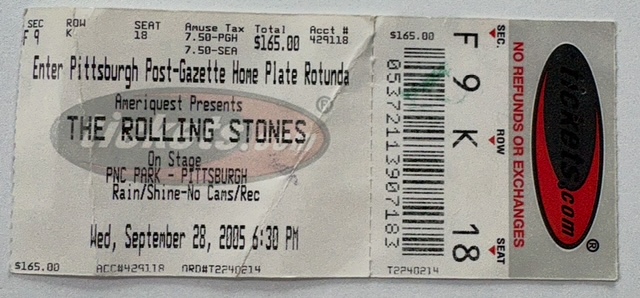
PNC Park · Pittsburgh, Pennsylvania
“Pearl Jam and The Rolling Stones—from the floor.”
The scan visibly preserves The Rolling Stones ticket; the accompanying collection record preserves Pearl Jam’s role as the opener. Together they document a rare stadium-scale convergence.
Attendance Artifact · Original scan retained by the Curator
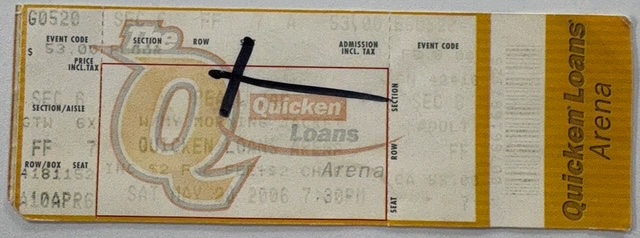
Quicken Loans Arena · Cleveland, Ohio
“Another chapter in a musical journey that had already lasted 13 years.”
This record matters because it shows duration: by 2006, Pearl Jam was no longer a first discovery but a continuing part of the collection’s living timeline.
Attendance Artifact · Original scan retained by the Curator
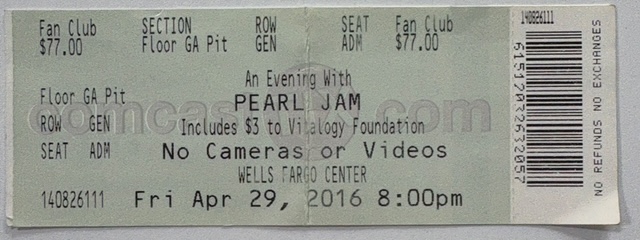
Wells Fargo Center · Philadelphia, Pennsylvania
“Second row. Ten, front to back. The greatest show I’ve ever attended.”
This is the full-circle attendance record: the album that started everything, performed front to back, from only feet away. It connects directly to the collection’s Ten Signing Archive.
Attendance Artifact · Original scan retained by the Curator
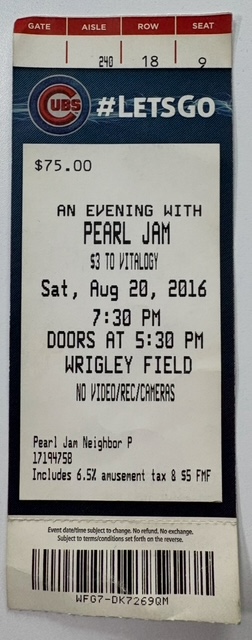
Wrigley Field · Chicago, Illinois
“A Pearl Jam concert that became part of a movie—and part of Cubs history.”
Wrigley closes the sequence by joining private attendance to a performance later preserved in the wider Pearl Jam record through Let’s Play Two.
Attendance Artifact · Original scan retained by the Curator
Signature artifacts pulled from the vault, selected for their rarity, historical alignment, and cultural significance.
The physical space in Erie is designed as an immersive journey through music history. Select a gallery door below to filter the digital archive by the physical room where those pieces reside.
A private viewing of the curated environment in Erie, Pennsylvania.
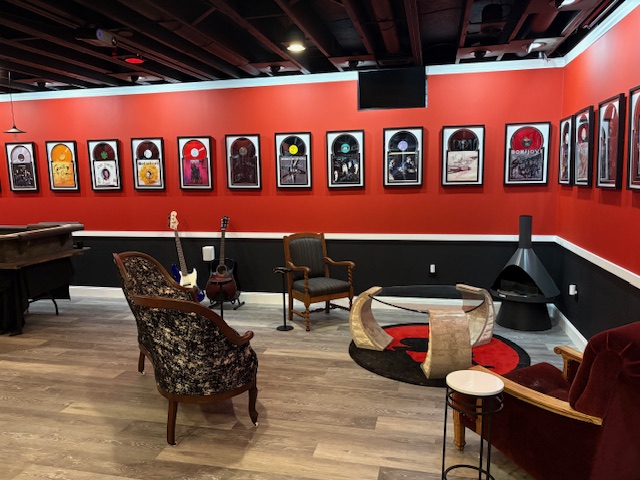
The centerpiece of the main gallery is a chronological wall of framed albums spanning over seventy years of recorded music history — from Frank Sinatra to Mumford & Sons' Prizefighter, arranged in strict release-date order. Every album on this wall is signed. The wall is not decoration — it is a living document of recorded music history, curated piece by piece over a lifetime.
Step inside the red-and-black gallery environment. The space is designed to evoke the atmosphere of a private speakeasy and a listening lounge, where every artifact has its dedicated place.
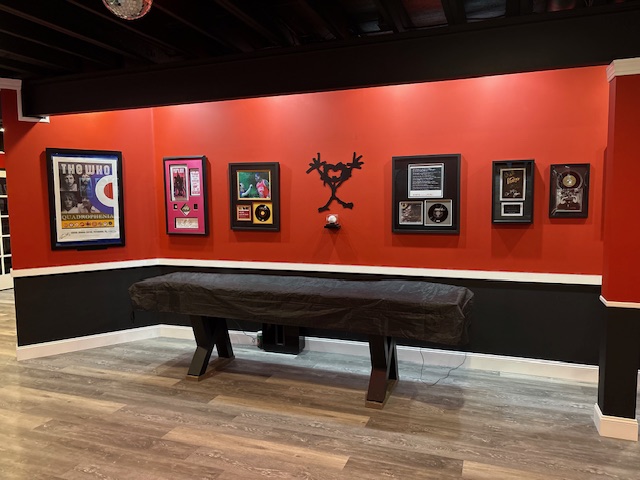
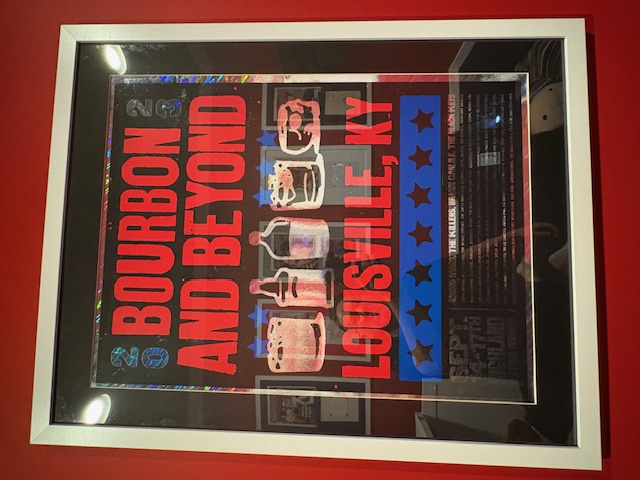
Housed within the museum's private VIP suite — The Sinatra Room — this poster wall preserves three pieces chosen for cultural weight rather than signature value. The Neil Young Mirrorball concert poster from Berlin (August 14, 1995), the Bourbon & Beyond 2023 festival poster, and the Mac Miller KIDS poster occupy the wall alongside the room's framed Sinatra portrait. None are signed. All are significant.
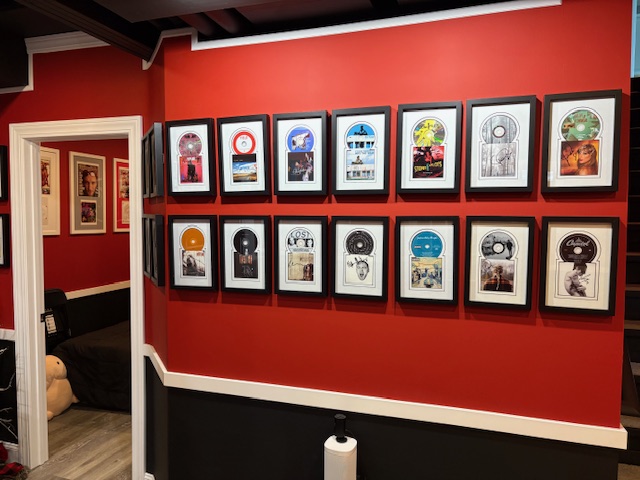
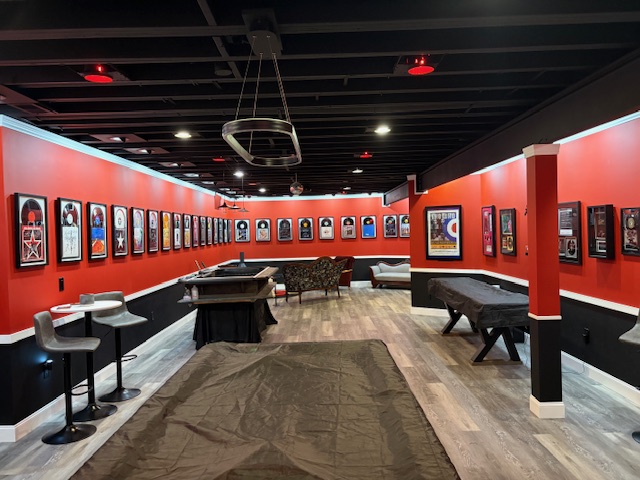
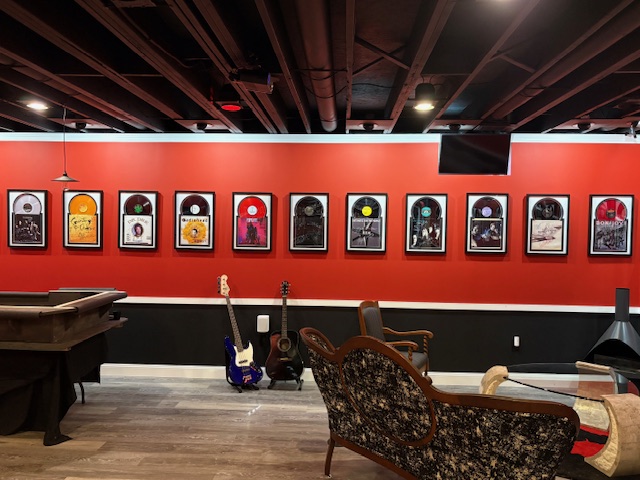
Tucked within the walls of L7067 is a private bedroom reserved for VIP guests of the museum. The Sinatra Room is finished in the same red-and-black palette as the main gallery, with a Murphy bed, a framed portrait of Frank Sinatra, and a dedicated poster wall. It is not part of the public tour. It is an invitation.
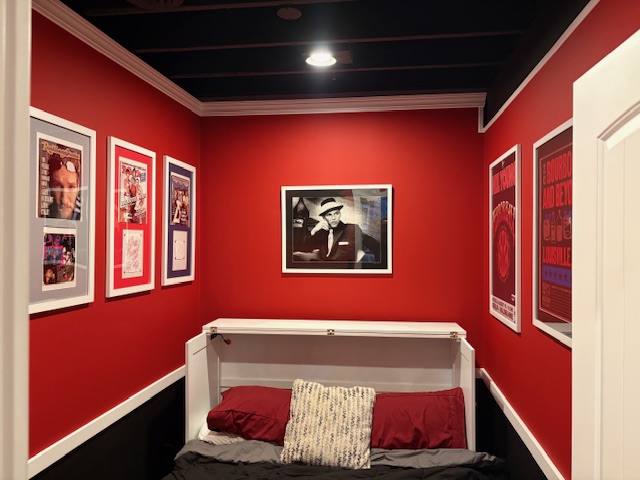
The Sinatra Room. Murphy bed, red walls, and a Sinatra portrait watching over every guest.
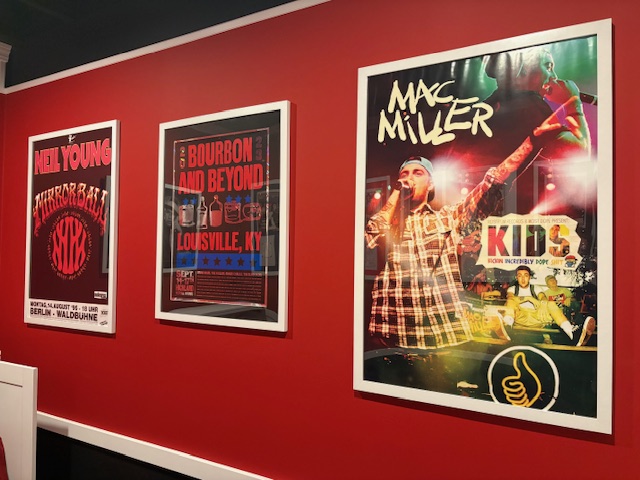
Three posters that matter — not because they are signed, but because of what they represent. Neil Young's Mirrorball Berlin concert (August 14, 1995), the Bourbon & Beyond 2023 festival, and Mac Miller's KIDS. Each was chosen deliberately. Each earns its place.
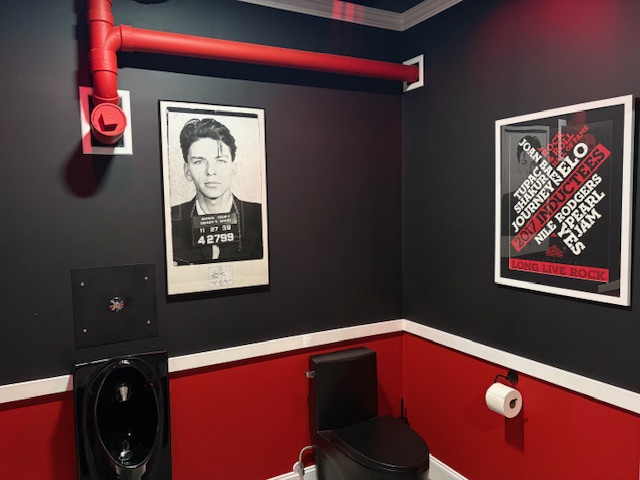
Adjacent to the Sinatra Room is the museum's private restroom — finished in black and red, with exposed pipes and a single piece of wall art positioned above the urinal: the Frank Sinatra mugshot from November 27, 1938. Arrest number 42799. It sets the tone. The 2017 Rock & Roll Hall of Fame induction poster hangs opposite. Everything smells authentic.
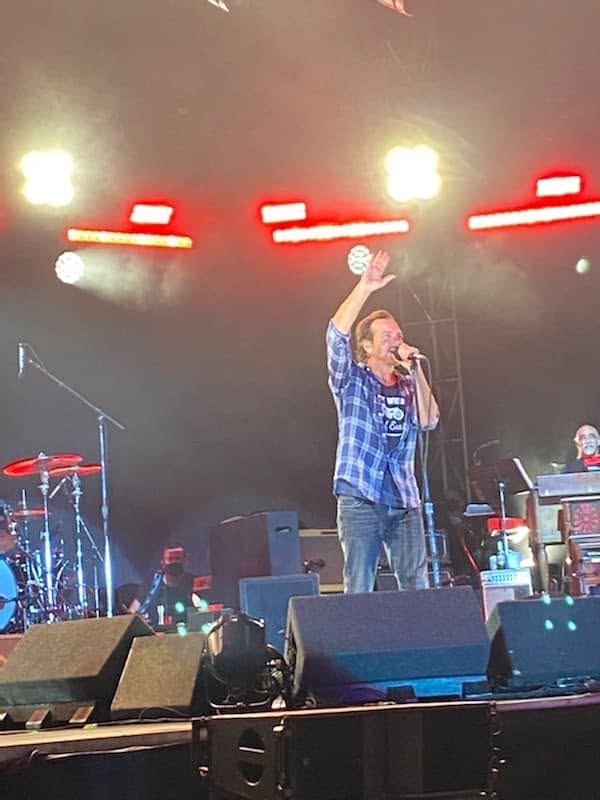
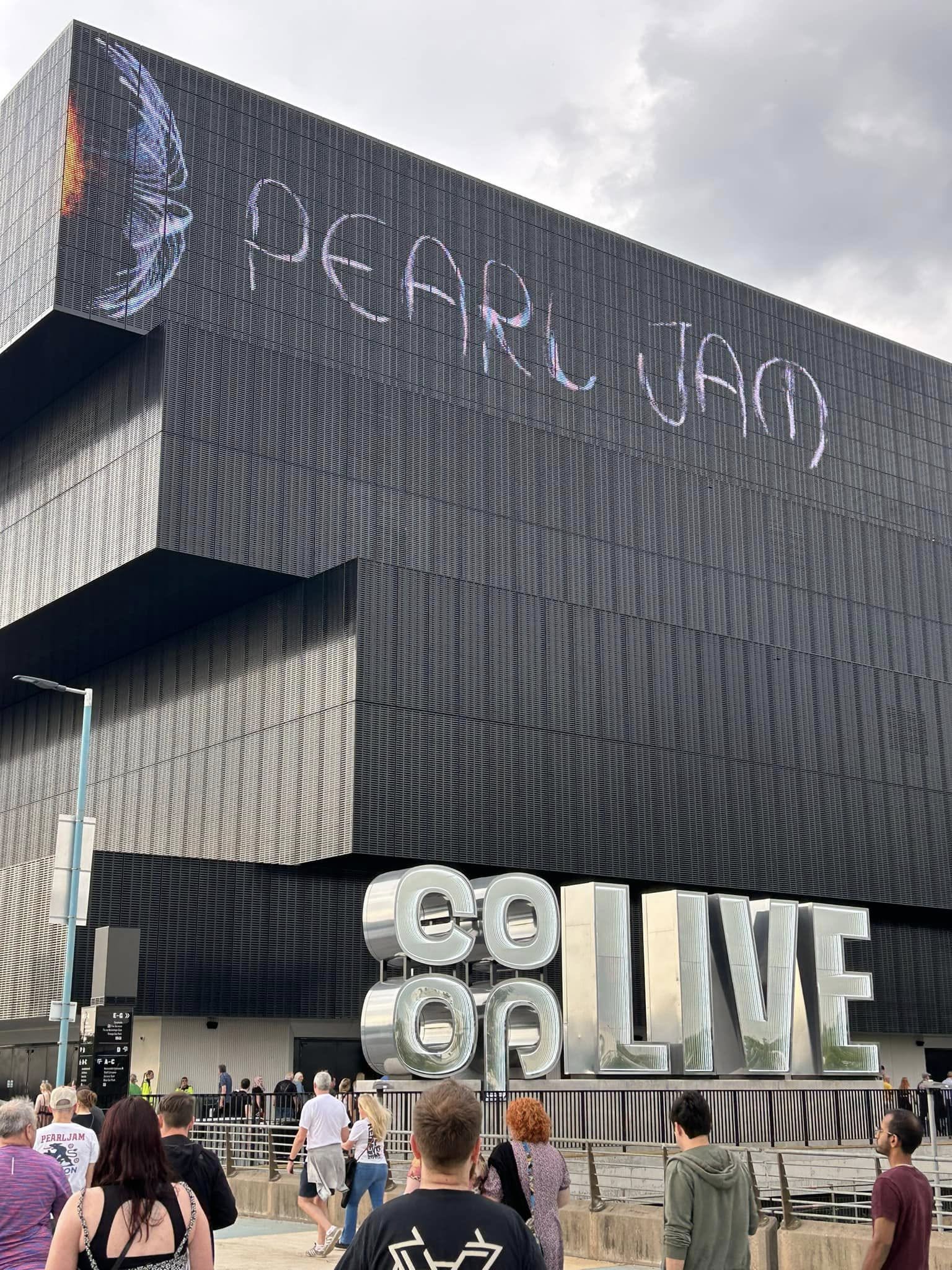
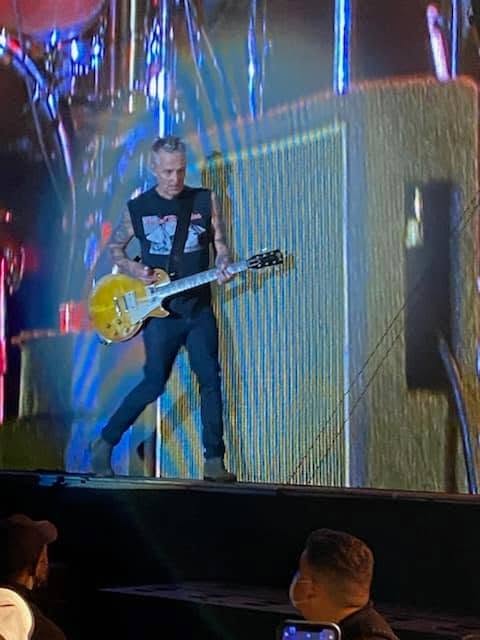
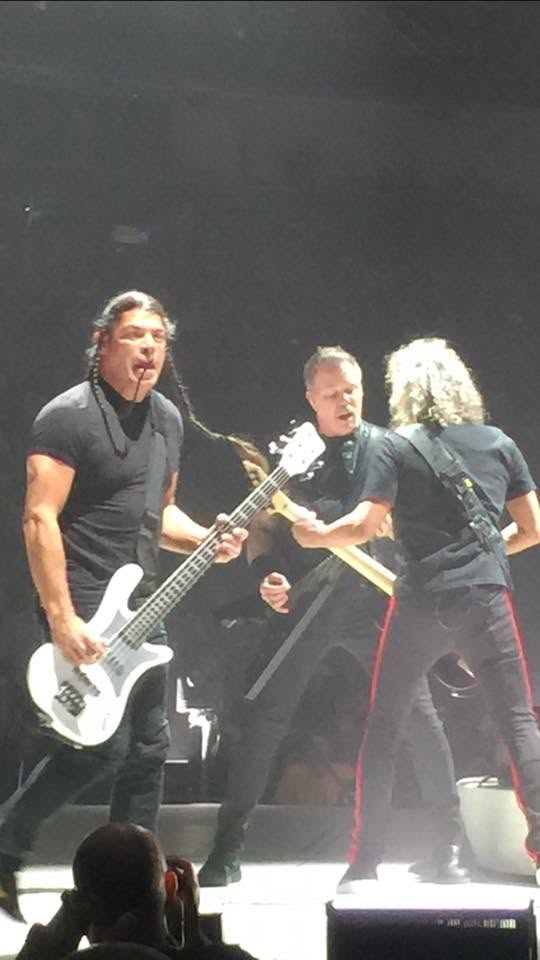
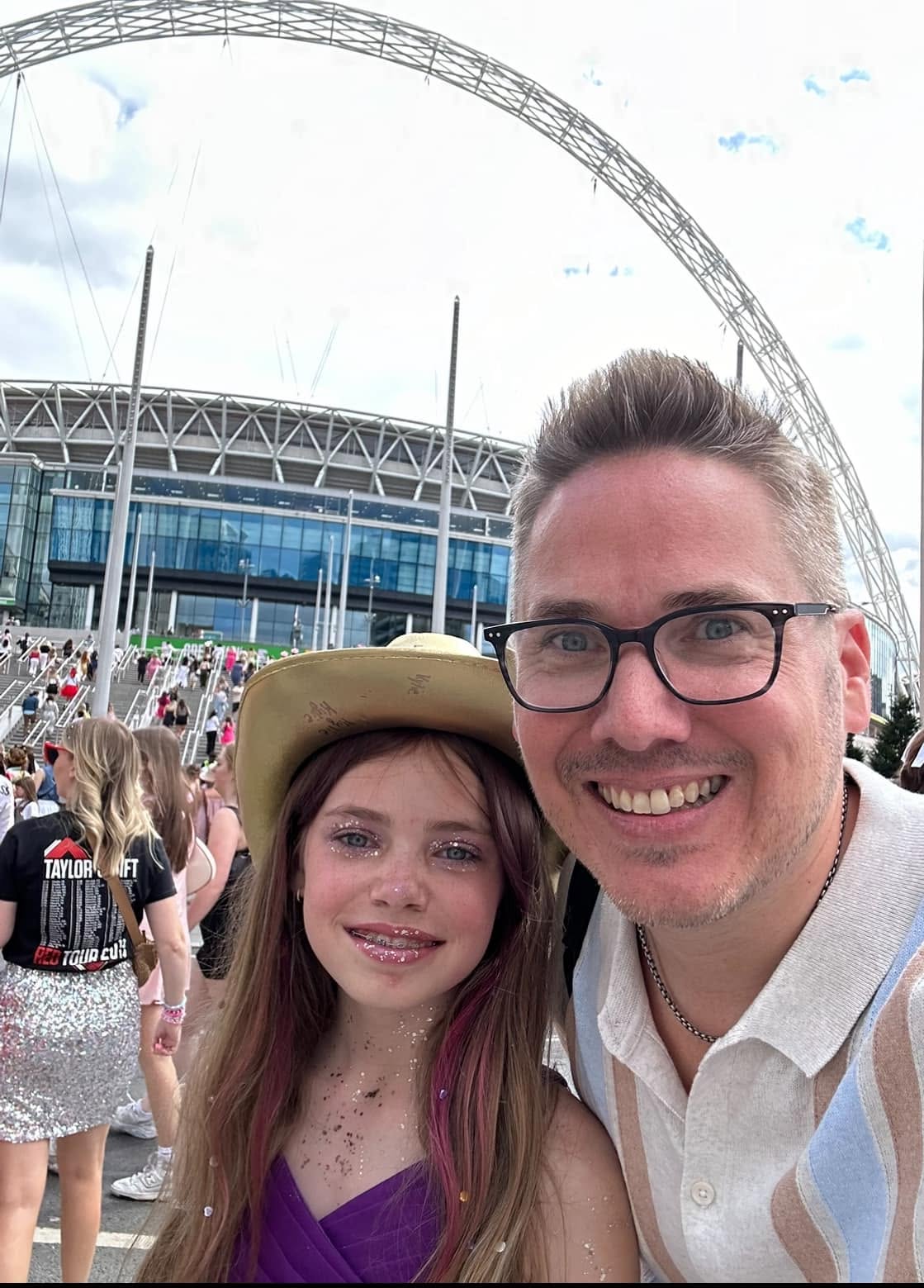
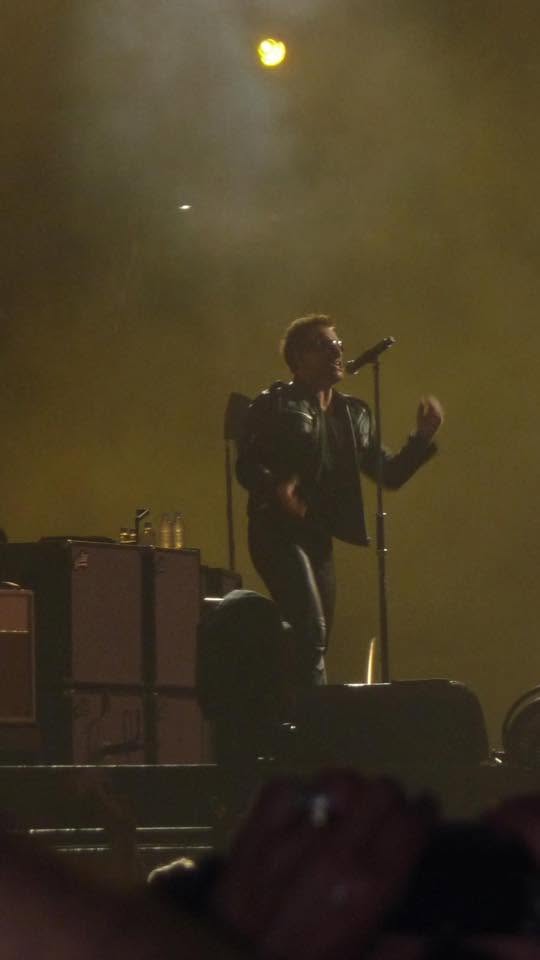
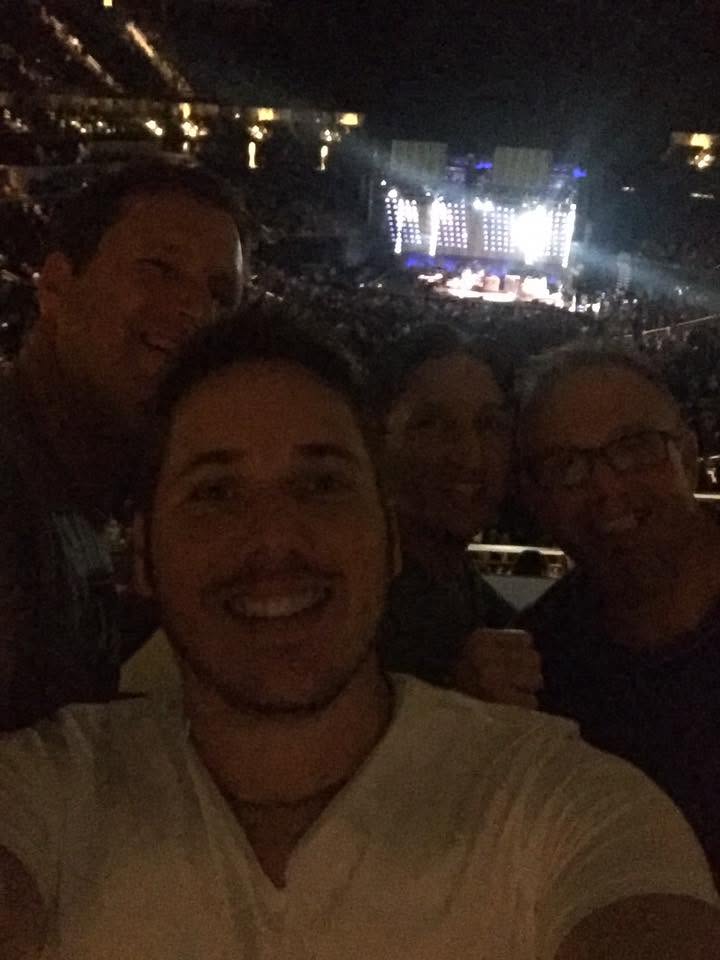
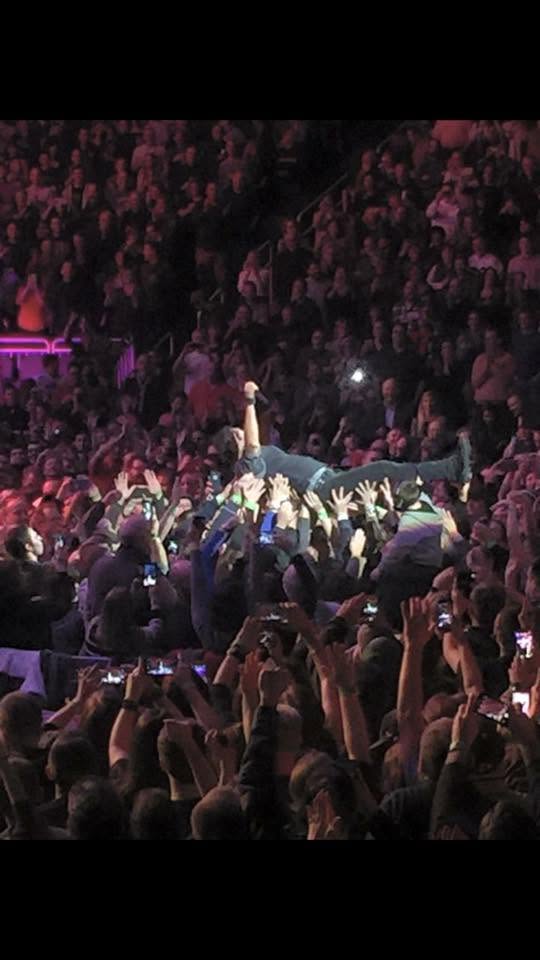
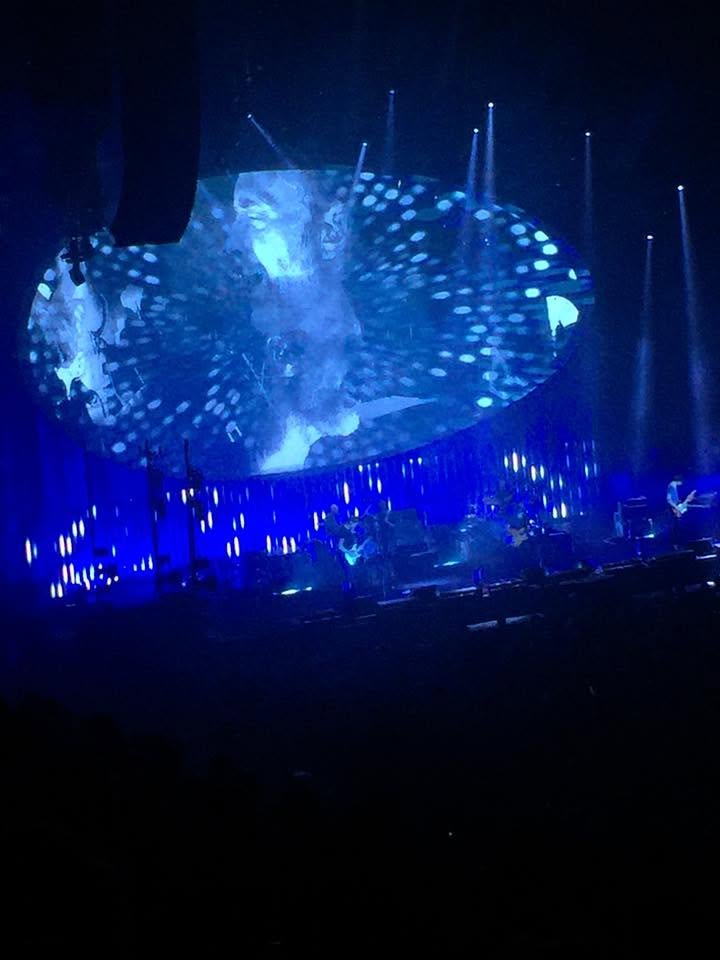
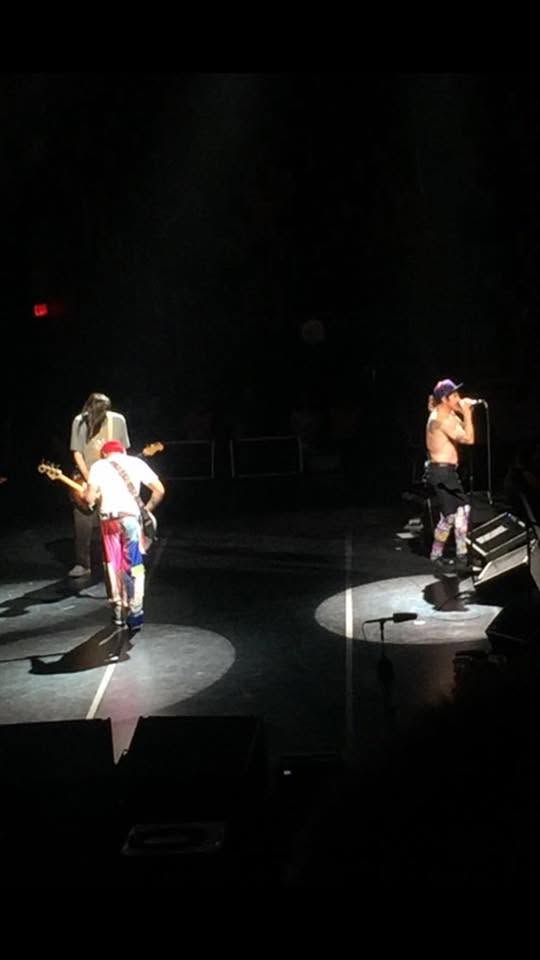
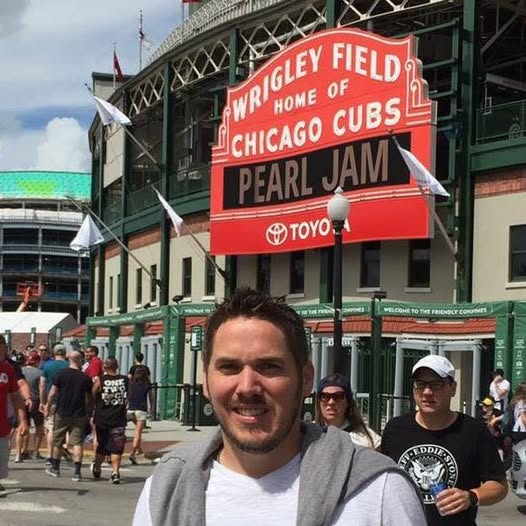
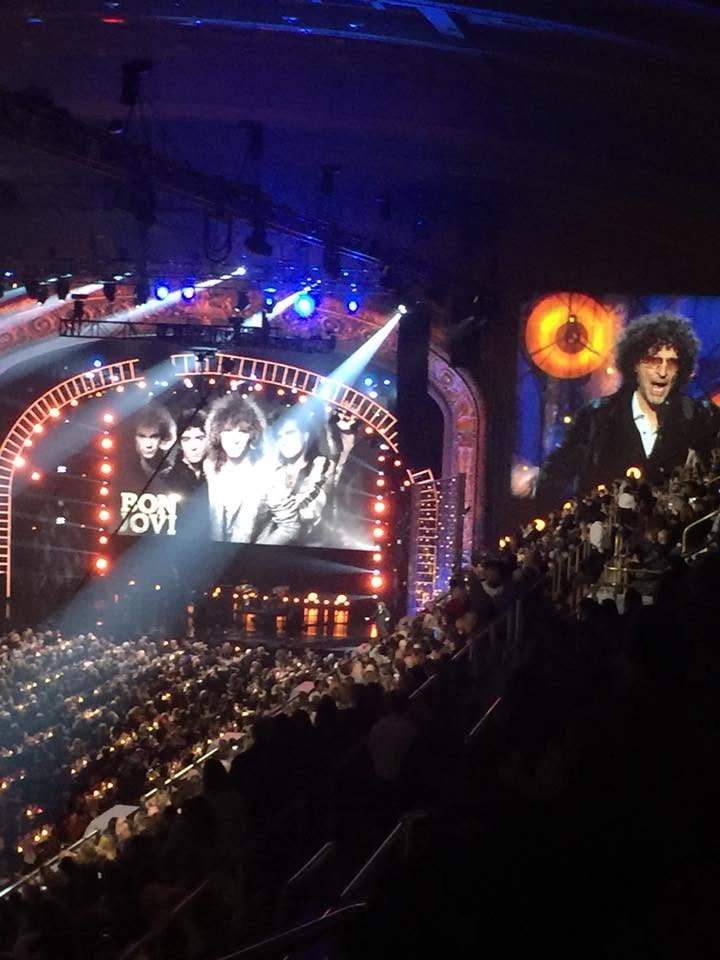
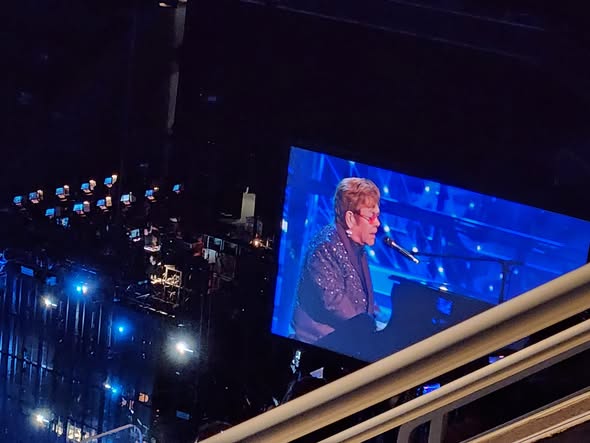
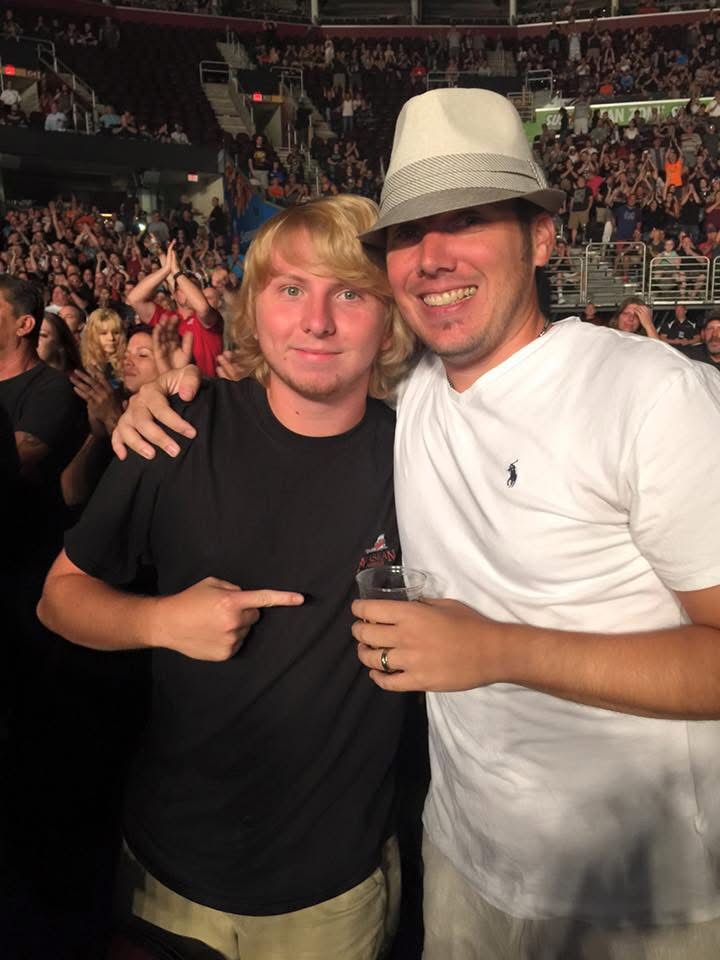
These are not stock photos. Every image in this gallery was taken by the curator — from the floor, the pit, the rail, and the crowd. Over four decades of concerts across the country, these photographs document the same artists whose artifacts now hang on the walls of L7067. The collection exists because of moments like these.
A discreet medallion system now identifies institutional recognition, authentication, provenance, rarity, and curator distinctions directly on every qualifying artifact.
inducted artists or groups represented across — collection exhibits
RL-001 through RL-133
Independent opinions are recorded exactly as issued. Official-store and personal provenance are documented separately from third-party review.